Tips
The best tip apps for musicians in 2027: 12 compared
The best tip apps for musicians, DJs and buskers in 2027, compared side by side: card and Apple Pay tips, QR codes, song requests, fees and who each one suits.
Read
By GigTag13 min read
Every working musician has walked past a busker and thought: could I do that? You could. Busking is the oldest gig there is, it needs no booker and no venue, and it is still one of the best ways to get better fast, build a following and earn on the days nobody has booked you.
It also has rules, and they change from one street to the next. This guide covers what busking is, where you need a licence in the UK, how to choose a pitch, what kit to take, what affects how much you make, and how to take tips from the people who no longer carry cash.
Busking means performing in a public space, such as a high street, a square, a market or a station concourse, and inviting the people who stop to give you something if they enjoyed it. The word is thought to come from an old Spanish word for seeking, and in the UK it has meant street performance for well over a century.
Most buskers are musicians: singers with a guitar, string players, saxophonists, beatboxers, whole bands. Street magicians, living statues, dancers and circus acts busk too. What they share is the deal with the audience. Nobody buys a ticket. People stop if you are good, and they pay what they think it was worth.
That makes busking unusually honest feedback. A song that works holds a crowd. One that does not, and the pavement tells you in seconds.
Yes. Busking is legal in the UK, and there is no national busking licence. What there is instead is a patchwork of local rules, because each council decides how to manage busking in its own streets. Most of them fall into one of three kinds:
Private land is different again. Shopping centres, station concourses and many squares are private, and you need the owner's permission to play there whatever the council says.
The government's own advice is simple: you may need a licence or permit from your council, so contact them before you busk. On GOV.UK, children under 14 are not allowed to busk.
Rules change, and councils review their schemes every few years. Treat the table below as a starting point, then check the council's own page before your first day.
| Place | Do you need a licence? | What to know |
|---|---|---|
| London: Camden | Yes, for amplified acts and for drums and most wind instruments | Camden's licence covered two years at the time of writing, at £150. Some crowded spots, such as outside Camden Town station, are off limits. Allow at least 20 days for approval. |
| London: Westminster | Yes, in the centre of Westminster | Covent Garden, Leicester Square and the West End are licensed. You play on marked pitches, each with its own conditions, and only some allow amplification. |
| London: other boroughs | Varies | Several boroughs, such as Royal Greenwich, run their own schemes. Others ask you to follow the Busk in London code of practice, launched by the Mayor of London in 2015. |
| Manchester | No | Manchester City Council says a busking licence is not required, but every busker must follow its code of conduct, which lists noise-sensitive spots to avoid. |
| Liverpool | No licence, best practice guidance | Liverpool City Council's guide to busking in the city centre was written with the Musicians' Union and Keep Streets Live. Its public space rules do not stop busking that follows the guidance. Amplification is allowed within limits. |
| York | No | York withdrew its old permit scheme. Its guidelines ask you to keep volume just above street noise, use no amplification between 9pm and 8am, and stay no more than two hours on one pitch. |
| Edinburgh | No | The council asks buskers to play between 9am and 9pm, at a volume passers-by can enjoy, to move at least 50 metres after an hour, and to stop if asked. It has been reviewing amplified busking, so check for new rules. |
| Dublin | Yes | Dublin City Council issues street performance permits under its 2016 bye-laws, with a cheaper short-term visitor permit and a separate permit for amplification. |
A few things are true almost everywhere, licence or not:
If you are planning to busk outside the UK and Ireland, the rules vary even more. Some cities need a permit, some only allow busking in set places, and some do not allow it at all. Check with the city before you go.
A good pitch has people walking past slowly, a reason to linger and room to stop. A great one has all three plus good acoustics.
| What to look for | Why it matters |
|---|---|
| Steady foot traffic at walking pace | Commuters rushing for a train rarely stop; shoppers and tourists do |
| Space in front of you | People will not stop if it means standing in the way |
| A wall or shopfront behind you | It reflects your sound forward and gives you a backdrop |
| Shade and shelter | You will be there for hours, and so will your instrument |
| Somewhere to sit nearby | Benches and steps turn passers-by into an audience |
| Distance from other buskers | Two acts in earshot of each other both lose |
Some of the most popular pitches in licensed areas are allocated or booked. In others there is an unwritten etiquette: whoever is there first plays, and the next act waits or finds another spot. Ask the busker already playing when they are finishing; most will tell you.
You can busk with nothing but an acoustic guitar and your voice. Many of the best buskers do. If you want more volume or a fuller sound, you will need a battery-powered amp.
A busking amp runs on batteries, has inputs for a microphone and an instrument, and is light enough to carry with everything else. When you choose one, look at:
Many cities allow amplification but limit it, and some licences ban it on certain pitches. A battery amp that sounds good at a moderate level keeps you on the right side of both.
There is no honest single answer, and anyone who gives you an average is guessing. Two buskers on the same street on the same day can take home very different amounts. What changes the number is:
To see how those add up, here is an illustrative example, not a typical figure. Say 200 people pass close enough to hear you in an hour, and 10 of them stop for a song. If half of those 10 have cash and give £2 each, you make £10 that hour. If the other half could tip by card and gave the same, the hour would be worth £20. The crowd did not change; the way to pay did.
Busking money also comes in other forms: people who follow you, buy your music, come to your next paid gig, or book you for a wedding or a party. Those are often worth more than the hat.
Fewer people carry coins than used to, and the ones who do not are not being mean. They want to give and find they cannot, then the song ends and the moment passes.
The fix is to let them tip with the phone already in their hand. A QR code on your sign opens a tip page, they choose an amount, and they pay by card, Apple Pay or Google Pay in a couple of taps, without installing anything. Keep the case open for cash as well, so you catch the whole crowd.
We compare the options in detail in how to take tips without cash and the best tip apps for musicians, and explain how a digital tip jar works.
With GigTag, the code on your stand opens your own page. On GigTag Pro, passers-by can tip by card, Apple Pay or Google Pay straight into your own Stripe or Square account, or your own Ziina account in the UAE, and they can send a song request with the tip. GigTag takes 0%; your payment provider charges its usual card fee. The same page shows your music, your socials and the days you play, so a passer-by can find you again. See how it works for buskers.
The people who stop for you on a Saturday are your best future audience. They have already heard you live and liked it. The job is to make sure they can find you again.
Put a single link on your sign that holds everything: your music, your socials, where you are playing next and a way to book you for a party. Add the days you busk as regular dates, so someone who catches you once knows where to find you next week. When someone asks if you do weddings, point them at the same page and let them send the details there.
A free GigTag page does that: your links, your gigs and weekly residencies, and a booking form, behind one code on your stand.
Busking is performing in a public place, such as a street, square or market, for tips from people passing by. Most buskers are musicians, but street magicians, dancers and other performers busk too. There are no tickets; people stop if they enjoy it and give what they feel it was worth.
Usually not, but it depends on the council. There is no national busking licence. Most councils ask you to follow a code of conduct, while some, including Camden and Westminster in London, run licence schemes. Private land such as shopping centres and stations needs the owner's permission. Check your council's busking page before you play.
In some boroughs. Camden needs a licence for amplified acts and for drums and most wind instruments, and Westminster needs one to perform in its central area, on marked pitches. Several other boroughs run their own schemes or follow the Busk in London code of practice. Check the borough where you plan to play.
In most places, yes, within limits. Many councils allow amplification but ask you to keep it to a reasonable level, and some ban it at night or on certain pitches. Amplification is the most common reason buskers are asked to move, so keep the volume low enough for people near you to talk.
It varies too much for an honest average. Location, time of day, weather, what you play and how long people stop all matter, and so does whether people can tip by card. Making it easy to give, with cash and a QR code for card tips, is the change most buskers can make today.
Most use a QR code on a sign that opens a tip page, where people pay by card, Apple Pay or Google Pay without installing an app. Some carry a card reader, which works but usually means stopping to handle it. A printed code works while you keep playing.
The best busking amp for you is battery powered, light enough to carry all day, has separate inputs for a microphone and an instrument, and sounds full at a moderate volume. Battery life of four hours or more at your usual level means you will not run out mid-session.
Yes, for many. It builds stamina, confidence and a set that holds strangers' attention, and it can bring followers and bookings as well as tips. It is also honest feedback: you learn quickly which songs stop people.
Check your council's rules, pick a pitch, pack light, and give people two ways to tip: the case for cash and a code for everyone else. Then put your name, your next dates and your booking form behind that code, so a good afternoon on the street turns into fans who come back.
The best tip apps for musicians, DJs and buskers in 2027, compared side by side: card and Apple Pay tips, QR codes, song requests, fees and who each one suits.
Read
Cash tip jars catch a shrinking share of the room. Compare card readers, payment handles and QR tip pages, and set up cashless tips before your next gig.
Read
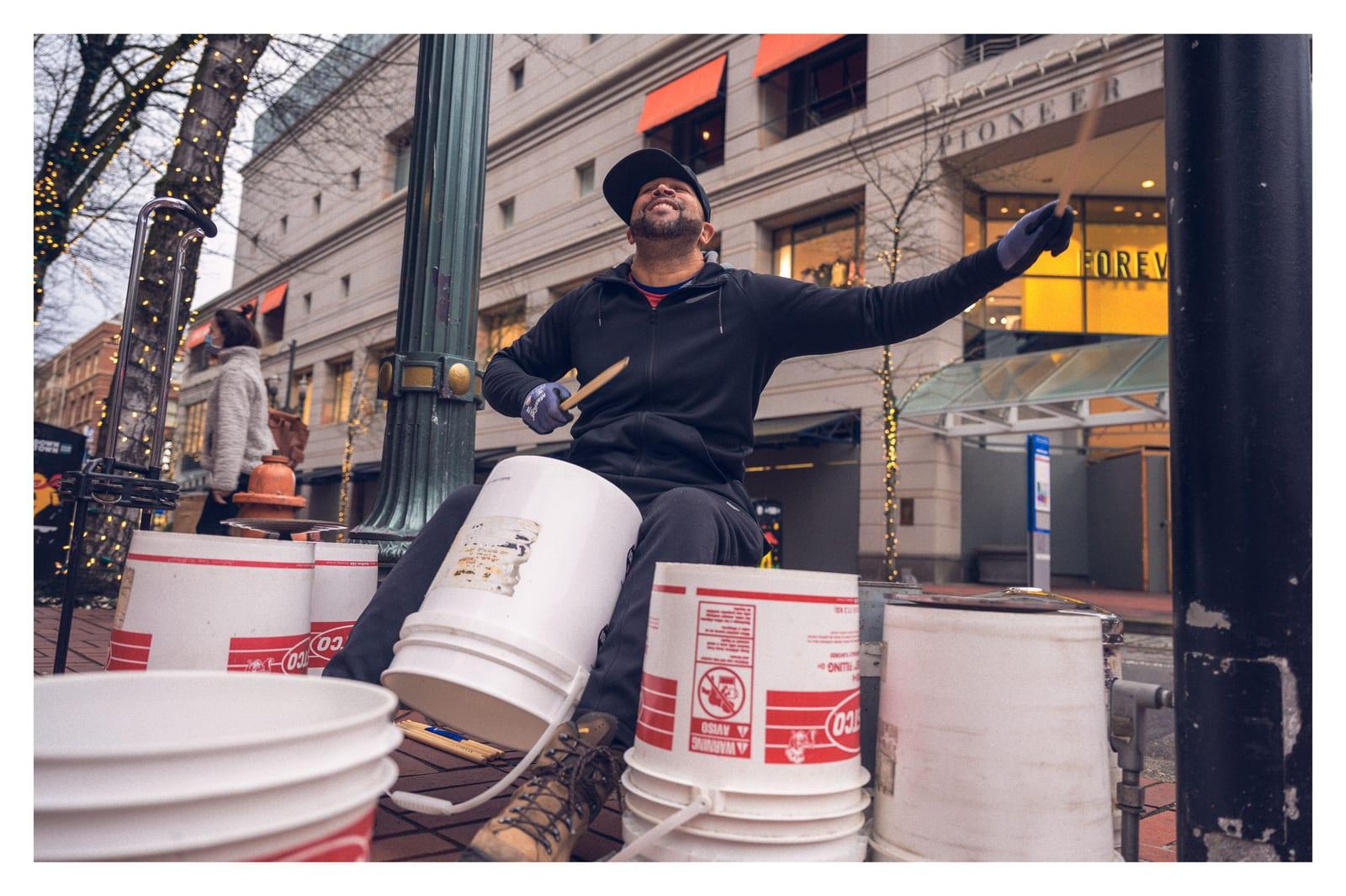
Set up a busking QR code tip sign that gets scanned, with the right size, wording, placement and testing before you play.
Read
For musicians
No app for your audience, nothing to download. Free to start.